
Gu Decodes the Brain’s ‘Gatekeeper’ to Understand Movement and Motivation
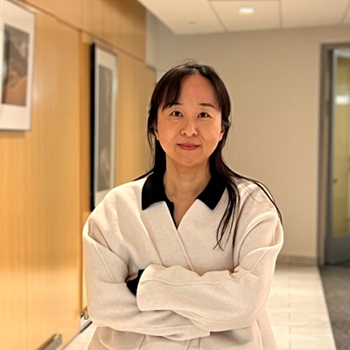 Deep within the human brain sits a sophisticated “gatekeeper” deciding which impulses become actions and which remain thoughts. Amid the multitudes of electric and biological signal activity, this critical region known as the basal ganglia harbor clues to the 21st-century frontier of brain science. Understanding this tangle of neurons is the life’s work of Bon-Mi Gu, Ph.D., one of the newer members to join the ambitious research team at the Hackensack Meridian Center for Discovery and Innovation (CDI).
The basal ganglia sits at the intersection of movement, motivation, and decision-making. Gu, who is an assistant member of the CDI and an assistant professor at the Hackensack Meridian School of Medicine and a research scientist at The Neuroscience Institute at Hackensack Meridian JFK University Medical Center. , has made it the key to her lab's research in understanding what makes this vital cluster of neurons "tick" - and what happens when they malfunction and lead to debilitating disease.
“The basal ganglia receive information from multiple brain areas and select what to do,” Gu explains. “It acts as a gatekeeper, choosing which information to focus on or which movement to initiate. It is endlessly fascinating."
The Gu Laboratory is dedicated to unraveling how dysfunctions in these circuits lead to behavioral alterations in movement disorders such as Parkinson’s, Huntington’s, and Tourette’s syndrome, as well as conditions like Obsessive-Compulsive Disorder (OCD), which also has its roots in basal ganglia dysfunction.
Breathing and Basal Ganglia
While her foundational work focused on movement and related disorders, Gu’s most recent research delved into a foundation niche of biology that has gained considerable attention: the link between the basal ganglia and physiological rhythms like respiration and sleep. The hope is to better understand all aspects of the basal ganglia's function.
A January 2026 paper from her team, which received significant coverage in science media, explored how these brain circuits interact with breathing rate and sleep states. By combining these physiological rhythms with traditional neural mapping, Gu aims to provide a more comprehensive understanding of how the brain regulates behavior in coordination with physiological rhythms like breathing. Consequently, it could be applied better to treat disorders.
“Adding these components to the story allows us to look at novel features,” says Gu. “Breathing is foundational for understanding many of our behaviors. Recently, we are looking at how basal ganglia interacts with breathing during locomotion - it is a really intriguing area.”
Tools of the Trade
To map the complexity here within, Gu’s laboratory employs an overlay of the latest modern neuroscience techniques, including: electrophysiology, measuring the electrical activity of single neurons and broader populations; optogenetics, using light to precisely activate neurons to manipulate behaviors; and fiber photometry, a technique to visualize the activity of specific cell types in real-time. By minutely observing these circuits in animal models, Gu and her team are building a foundation for translational research that could eventually lead to better treatments, such as better deep-brain stimulation for patients with severe Parkinson's or OCD.
A Home for Discovery at the CDI
Gu’s peripatetic academic journey began in South Korea, where she earned her Bachelor’s and Master’s degrees in Biological Science and Neuroscience at Seoul National University. She relocated to the United States for a Ph.D. in Psychology and Neuroscience at Duke University, with postdoctoral research stints afterward at the University of Michigan and the University of California, San Francisco.
Her interest in the basal ganglia is driven by a genuine curiosity about human motivation, behavior, and how impulse and cognition develop and interplay off one another.
“It is important to explain behaviors,” she says. “If you are interested in behavior, it is natural to get into the study of this circuit—why we choose this, why we do this”.
Goals, Personal and Future
Outside the lab, that inherent curiosity fires Gu’s own mind. She loves to read and learn beyond the boundaries of the basal ganglia.
An especial love is hiking out on the trails of New Jersey and environs. She has found that the tried-and-tested walking for inspiration and to clear one's head has been beneficial as her research has attained new heights.
“I think more miles on the trail will be better for my brain,” she quipped from her office, reflecting on the importance of mental rest and resetting in a device-driven world.
Her ultimate goal: to connect basic neuroscience with clinical applications, ensuring that the complex signals her lab decodes today lead to improved lives for patients tomorrow.