
Li Decades the Brain’s Silent-Warning Signals
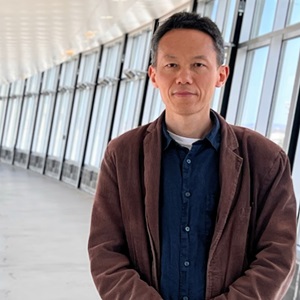 The human brain is the engine of survival, the organic computer keeping Homo sapiens at the top of the food chain. But for Jiali Li, Ph.D., the most critical moments in a brain’s lifecycle have yet to be really understood. These moments aren't the moment of the brain’s peak performance, but rather the subtle and silent shifts which happen decades before a disease like Alzheimer’s makes itself known.
“Alzheimer’s disease is like a breakdown of brain homeostasis, rather than just a single molecular pathway problem” said Li, associate member of the Hackensack Meridian Center for Discovery and Innovation (CDI). “Our brain is composed of multiple cell types - like neurons, microglia, oligodendrocytes - and their disruption impacts the entire system’s balance.”
Li’s research program targets the molecular and cellular mechanisms underlying brain aging and neurodegenerative disease, with a specific focus on finding the earliest-possible hallmarks of decline. While most in the field focus on late-stage symptoms like noticeable memory loss, Li is scrutinizing a window 10 to 20 years before those clinical symptoms even appear.
“Jiali Li’s work is a fascinating exploration of what we can do to prevent and mitigate disease which still confound science,” said David Perlin, Ph.D., chief scientific officer and executive vice president of the CDI. “It is hugely promising and potentially thrilling science to host here at our institution.”
The Pathway to Prevention
The work aims to discover at the edge of what is scarcely understood currently. One of Li’s recent lines of inquiry is a long non-coding RNA derived from the mitochondrial genome, rather than the cell’s nucleus; the levels of this RNA significantly decrease during the natural aging process - and also in the development of Alzheimer’s.
A primary focus of the Li work is the locus coeruleus, a small region in the brain stem which is an important center for stress and panic responses. The area has shown itself to be vulnerable in the earliest development stages of Alzheimer’s, with detectable changes before other locations show degeneration or plaques associated with the disease.
Li and his lab have found that in that nascent state of Alzheimer’s, neurons in the locus coeruleus show a distinctive electrical change which precedes the death of the cells. This declining change triggers neuropsychiatric hallmarks such as anxiety, depression, and sleep disorders - symptoms which impact a majority of Alzheimer’s patients before identifiable memory loss.
Two career highlights focus on a rare neurodegenerative congenital syndrome called Ataxia telangiectasia: he helped author a 2012 Nature Medicine paper which showed the epigenetic development of the disease through a protein called HDAC4; and he was lead author on a paper in September 2025 showcasing a new preclinical model of the condition. Taken together, these clues could not only provide cues and potential cures for the diseases - but also for ways to slow down the natural aging process itself.
“If we find these clues early, there is the possibility of early intervention," said Li, also principal investigator at The Neuroscience Institute at JFK University Medical Center. “We want to know whether our studies can be translated into screening methods to warn people of potential future problems.”
Global Neuroscience, Brain and Longevity
His scientific journey spans multiple countries, and multiple prestigious institutions. He earned his Ph.D. in Neurobiology from Shanghai Medical School at Fudan University, after an M.S. in Pathophysiology at Kunming Medical University. His career also included postdoctoral fellowships at the Mount Sinai School of Medicine, and Rutgers University.
He joined the CDI in 2025, and currently also serves as a professor of Neurology at the Hackensack Meridian School of Medicine.
For Li, neuroscience goes beyond a professional specialty - it is also a key to understanding the human condition. He recalls growing up in China by seeing that not many people had aged to the point of neurodegeneration - but when he has visited his hometown intermittently over the years, he sees an older population which has developed many of the diseases which seemed not to exist before. It shows a global need to tackle these emerging health problems.
“For human beings, our brain is the most important,” he said. “Brain health is longevity.”