
Au Lab
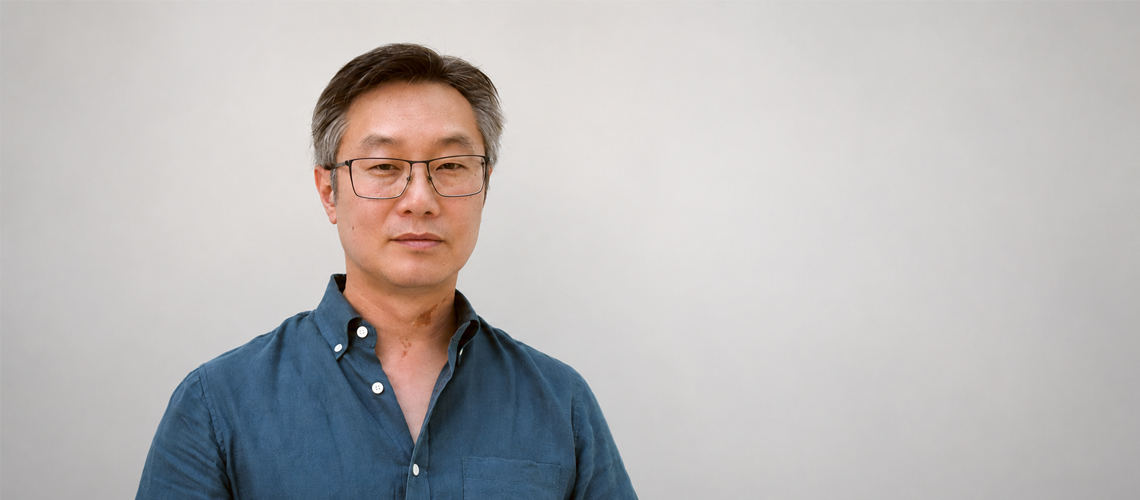
Edmund Au, Ph.D.
Associate Member, Center for Discovery and Innovation, Hackensack Meridian Health
Dr. Edmund Au investigates the development and synaptic integration of cortical interneurons (cINs), focusing on how circuit miswiring drives neurodevelopmental and neurodegenerative disorders.
He completed his B.Sc. in Biochemistry and Ph.D. in Neuroscience at the University of British Columbia, where he developed methods to expand olfactory ensheathing cells and identified SPARC as a driver of neural repair in spinal cord injury. As a postdoctoral fellow at the NYU Neuroscience Institute, Dr. Au engineered a novel stem cell–based model of the medial ganglionic eminence to decode interneuron diversity. His research identified key transcriptional regulators (Pou3f4, Lmo3) of parvalbumin interneuron specification and revealed that the synaptic scaffolding protein Cntnap4 maintains essential inhibitory and neuromodulatory balance.
Before joining CDI, Dr. Au directed research laboratories at Columbia University and Weill Cornell Medicine. His group uncovered how non-canonical Wnt–Ryk signaling and the transcription factor St18 dictate interneuron cell-fate choices. To overcome the protracted timeline of human neuronal development, his lab bypassed molecular checkpoints to accelerate stem-cell-derived interneuron maturation. Additionally, his team created Synaptic Subtype Identification (SSID), a machine-learning and imaging platform that classifies neuronal populations at scale.
Widely published in journals such as Nature, Neuron, and Cell Reports, Dr. Au integrates mouse genetics, stem-cell models, and high-throughput computational tools at CDI. His translational research maps how distinct interneuron subtypes establish cortical connectivity, aiming to design targeted therapies that restore normal circuit function in human disease.
At CDI, his team combines mouse genetics, stem cell models, and computer vision to trace cortical circuit assembly and uncover therapeutic targets for restoring healthy brain function.
Selected Publications
- Au E, Ahmed T, Karayannis T, Biswas S, Gan L, Fishell G. A modular gain-of-function approach to generate cortical interneuron subtypes from ES cells. Neuron. 2013 Dec 4;80(5):1145-58. doi: 10.1016/j.neuron.2013.09.022. PMID: 24314726; PMCID: PMC5085060.
- McKenzie MG, Cobbs LV, Dummer PD, Petros TJ, Halford MM, Stacker SA, Zou Y, Fishell GJ, Au E. Non-canonical Wnt Signaling through Ryk Regulates the Generation of Somatostatin- and Parvalbumin-Expressing Cortical Interneurons. Neuron. 2019 Sep 4;103(5):853-864.e4. doi: 10.1016/j.neuron.2019.06.003. Epub 2019 Jun 27. PMID: 31257105; PMCID: PMC6728181.
- Nunnelly LF, Campbell M, Lee DI, Dummer P, Gu G, Menon V, Au E. St18 specifies globus pallidus projection neuron identity in MGE lineage. Nat Commun. 2022 Dec 14;13(1):7735. doi: 10.1038/s41467-022-35518-5. PMID: 36517477; PMCID: PMC9751150.
- Dummer PD, Lee DI, Hossain S, Wang R, Evard A, Newman G, Ho C, Schneider-Mizell CM, Menon V, Au E. Multidimensional analysis of cortical interneuron synaptic features reveals underlying synaptic heterogeneity. bioRxiv [Preprint]. 2024 Apr 17:2024.03.22.586340. doi: 10.1101/2024.03.22.586340. PMID: 38659827; PMCID: PMC11042224.